Groceries are the most predictable category to cut from most household budgets. Unlike rent (usually locked in) or insurance (fixed by contract), grocery spending has 15–30% of slack in it for almost everyone — and the changes don't require giving up the food you actually enjoy.
This guide ranks the 14 strategies that actually move the grocery number, in order of impact per effort. Start with the top 3–4; they do most of the work. The rest are available if you want to push further.
The short version
- Most households can cut groceries by 20–30% without noticeable lifestyle change.
- The #1 move: shop with a list and go once a week, not 3 times.
- The #2 move: track the real number for 30 days — almost everyone underestimates by 25%.
- Meal planning + inventory-first cooking beat almost every other tactic.
First: what's the real number?
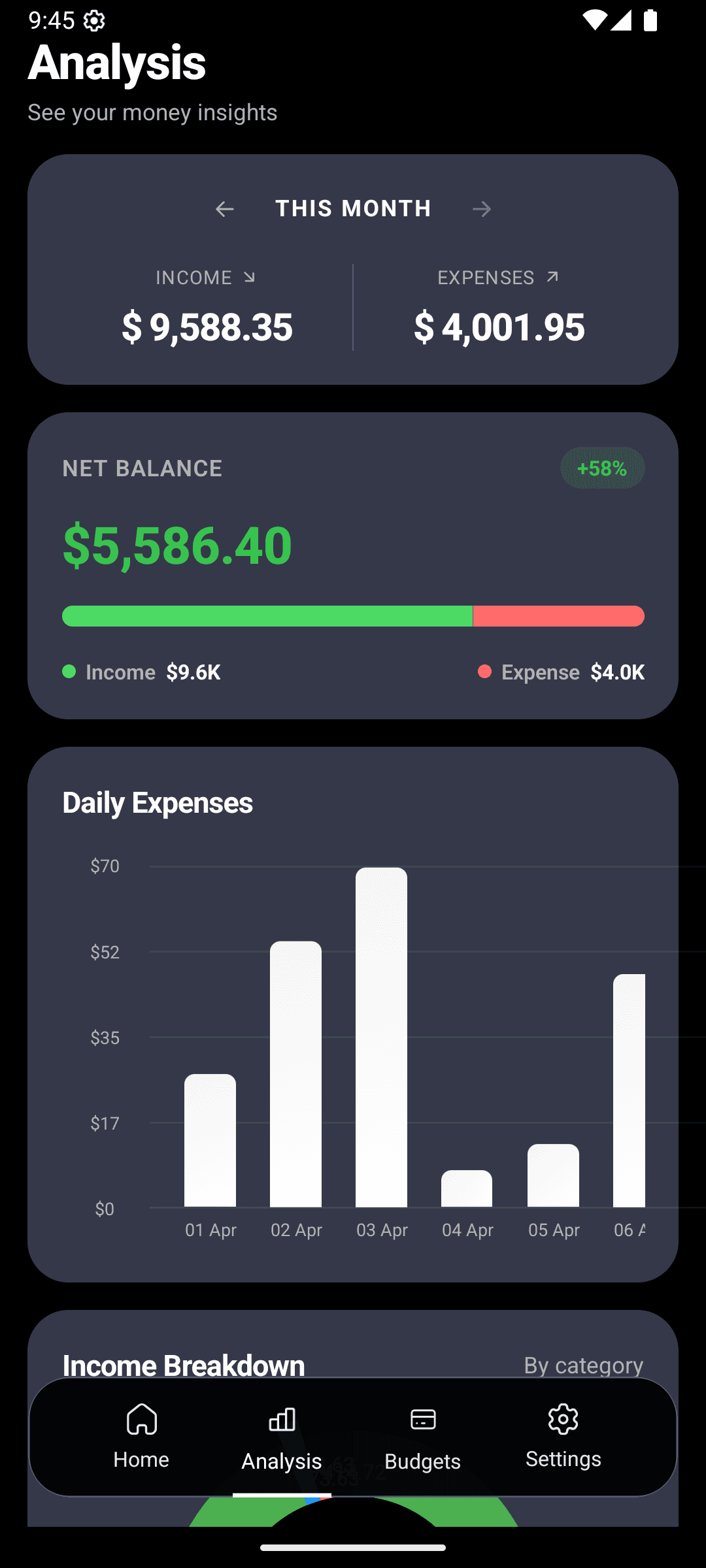
Before you change anything, find out what you're actually spending. Open CashFlow AI's analytics and pull the last 3 months of spending in "Groceries." Divide by 3 for your monthly average.
Three likely reactions:
- "That's higher than I thought." — Normal. Most people underestimate grocery spending by 20–30%, usually because of quick Target runs, convenience store stops, and coffee-while-shopping purchases that don't register as "groceries" in memory.
- "That includes a lot of non-grocery stuff." — If Target runs show a single transaction including groceries + household + random impulse buys, split them. CashFlow AI lets you split transactions into multiple categories. It matters for accuracy.
- "That's about right." — You're in the minority. Skip to the strategies.
Now you have a baseline. Every tactic below becomes measurable against that number.
The top 4: where 80% of the savings come from
1. Shop once a week with a list
Every extra grocery trip adds 10–15% to the weekly total. You pick up "just a few things" and leave with $60 of stuff that wasn't planned. Two mid-week runs a week becomes $400+ in monthly leakage for no benefit.
The rule: one main shop per week. If you run out of something, add it to next week's list.
The list part matters too. Without a list, grocery shopping is navigation by dopamine: what looks good, what's on sale, what you remember you were "out of" (you probably weren't). With a list, you buy what the household needs and leave.
Pair the list with a 30-second inventory check before shopping. Open the fridge, the pantry, the freezer. What's already there? What needs to be used up? Then build the list.
2. Plan dinners — 4 or 5 of them
The single biggest driver of grocery-plus-dining-out spending is "we don't have anything for dinner." That decision, made at 6pm, costs $40–$80 in takeout.
A rough plan solves this. You don't need recipes or a Pinterest board. You need 4 or 5 dinner ideas for the week, each anchored around 2–3 main ingredients. Example:
- Monday: tacos (ground beef, tortillas, salsa)
- Tuesday: pasta with vegetables (pasta, tomato sauce, whatever's in the crisper)
- Wednesday: sheet-pan chicken + potatoes + broccoli
- Thursday: stir-fry (chicken from Wednesday, rice, frozen veg)
- Friday: breakfast for dinner (eggs, toast, fruit)
15 minutes on Sunday. That's it. Most weeks you'll use up what's already in the house plus one grocery run, and you'll skip 3–4 takeout orders.
3. Track grocery spending weekly, not monthly
Grocery is a high-frequency category — 4–8 transactions a month in most households. By the time you check at month-end, it's too late to course-correct.
Instead, set a weekly budget (monthly ÷ 4.3 weeks). Check it once — Sunday afternoon or Monday morning — and use it to gauge the week ahead.
If you're at 70% of the weekly budget and it's only Wednesday, you know Thursday-Friday needs to lean on pantry items instead of another grocery run. This isn't restriction; it's just information.
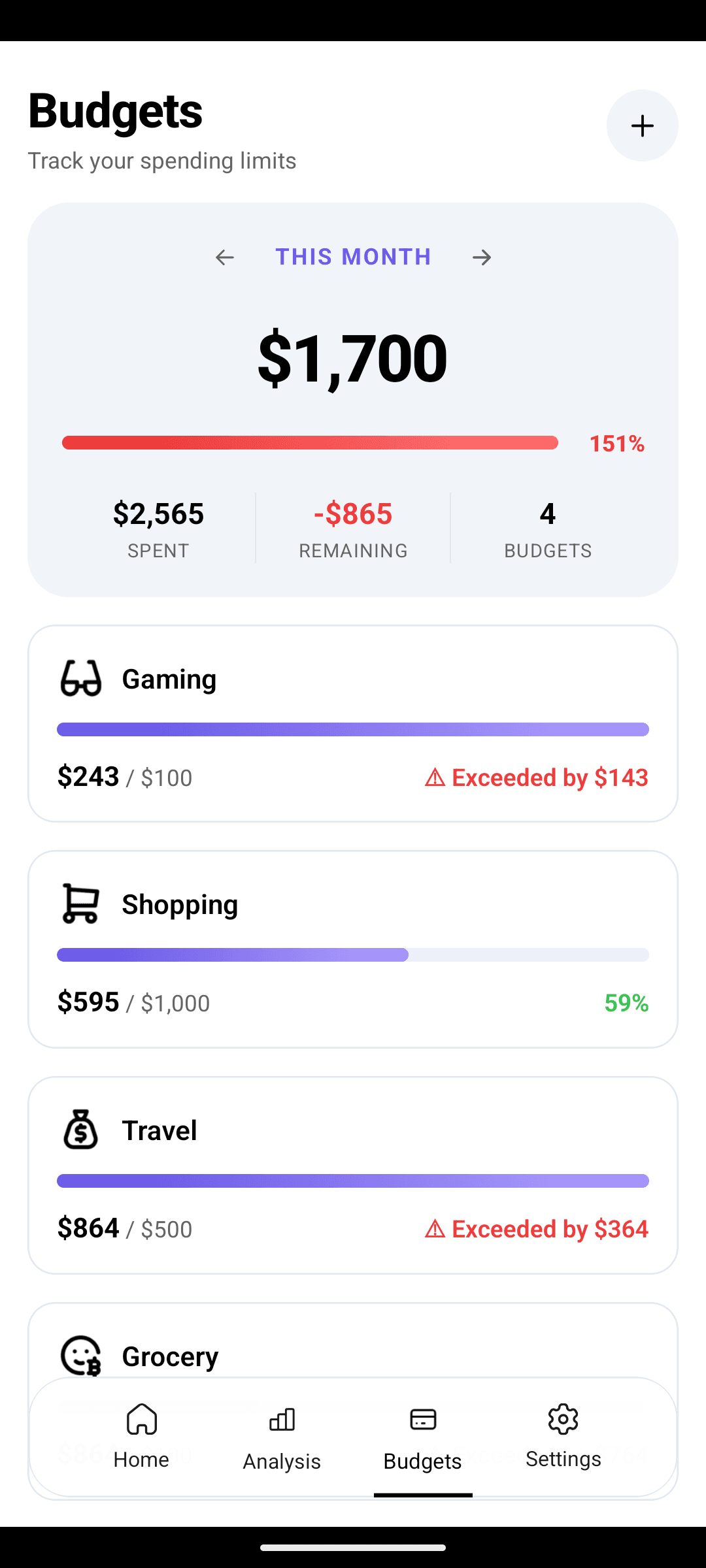
CashFlow AI's smart budget tracking makes this automatic — set a weekly budget for groceries and the progress bar tells you where you stand without any calculation.
4. Cook from the pantry first, shop for gaps
The default flow — plan the meals, make the list, buy everything — ignores what you already own. The better flow:
- Open the pantry, fridge, freezer.
- What do you have that needs to be used up?
- Plan 2–3 meals around those things.
- Plan 2–3 more meals with what's missing.
- Shop only for the gaps.
This cuts 20–40% off weekly spending for most households, because there's always more food already in the house than you realize. The average US household throws out 30% of the food it buys. Using what's there first is the single highest-return habit in this whole guide.
The next 10: steady compounding
5. Price-compare per unit, not per item
A $4 box of cereal can be a worse deal than a $6 box if the cheaper one is two-thirds the size. Modern store shelves show price per ounce or per pound on the tag; use that number, not the sticker price.
Once you've made this a habit, it takes no extra time. It just requires looking at the small number instead of the big one.
6. Shop the perimeter first
Supermarket layout is designed to walk you through high-margin processed goods. The perimeter (produce, dairy, meat, bakery, eggs) has the staples; the interior has the snacks, the cereals, the frozen dinners, and the impulse buys.
Shop the perimeter for 80% of your cart. Step into the interior only for the specific things on your list.
7. Buy store brands on staples
Store-brand (generic) versions of basic staples — rice, pasta, milk, eggs, flour, butter, canned tomatoes, frozen vegetables — are typically 20–30% cheaper than name brands and indistinguishable in blind tests.
Keep name brands where you genuinely taste the difference (a few coffee preferences, a favorite bread). Switch everything else.
8. Buy whole instead of pre-cut
Pre-cut produce and pre-made convenience items have a 50–200% markup versus the whole version:
- Pre-cut pineapple vs. whole pineapple
- Shredded cheese vs. block cheese
- Pre-cooked chicken vs. raw chicken
- Bagged salad vs. head of lettuce
Pay the convenience premium where your time is tight (parents of young kids, intense work weeks), but don't default to the pre-cut version. The 90 seconds of cutting saves real money over a year.
9. Buy in season
Out-of-season produce costs 2–4x in-season. Seasonal eating doesn't have to be religious — just don't buy peaches in February or asparagus in November at full price. Whatever's on sale usually tracks what's in season.
10. Freezer is your discount lever
When something you use often is on a steep discount, buy enough to fill the freezer. Works for:
- Meat (chicken, ground beef, bacon)
- Bread
- Berries
- Bulk cooked meals (double a recipe, freeze half)
Freezer space is limited, so the tactic has natural guardrails — you can't binge on freezer-stocking if the freezer is full.
11. Limit the snack budget
Snacks (chips, cookies, granola bars, soft drinks) are the single most price-elastic category in the grocery cart. They're mostly bought on impulse, and switching them off or switching to cheaper versions doesn't materially change life quality.
Set a specific "snacks" sub-limit — say, $40/week for a family of 4 — and stick to it. You'll notice a 5–10% drop in total grocery spending and zero meaningful quality-of-life impact.
12. Use a warehouse club strategically
Costco/Sam's/BJ's pay off for specific categories:
- Paper goods (toilet paper, paper towels)
- Cleaning supplies
- Pantry staples (olive oil, rice, flour, nuts)
- Frozen proteins (if you have freezer space)
- Specific produce you go through quickly
They don't pay off for:
- Perishables in quantities you won't finish
- Trendy / impulse items (the warehouse club's true profit driver)
Run the break-even math on membership fees. $60/year in membership means you need to save at least $60/year on warehouse purchases vs. the alternative — achievable for most households, but only if the shopping is disciplined.
13. Track grocery waste
Once a week, look in the fridge before shopping. What went bad? Estimate the cost.
Most households have $20–$40 of waste per week, which is $80–$160/month — roughly 15% of total grocery spend, trashed. Awareness alone cuts this by half within a month.
The single highest-return habit: eat leftovers the next day. Most families cook enough for 4, eat enough for 3, and throw away the fourth portion two days later. Rename "leftovers" to "already-made lunch" and your food budget quietly drops.
14. Stop by the store 2 hours before closing
Many stores mark down meat, bakery, and deli items late in the day. Not every store; not every day. But if your schedule allows a weekly stop around the right time, 30–50% off is common on items you can use that day or freeze.
This is optional optimization. Skip if your schedule doesn't fit.
The worked example: family of 4
Baseline for a family of 4 at median grocery spending: $1,400/month ($323/week).
Applying the top 4 strategies:
| Change | Monthly impact | |---|---| | Weekly shop with a list (down from 2–3 trips) | -$120 | | Meal planning + inventory-first cooking | -$180 | | Weekly tracking (prevents drift) | -$50 | | Store brand switch on staples | -$80 | | Total monthly savings | -$430 |
New monthly spend: ~$970. Savings: ~31%.
That's $5,160/year. For a typical household, grocery optimization is the single easiest $5K/year you can add to savings — without giving up food you enjoy.
What about restaurants and dining out?
Groceries and dining out are two sides of the same coin. Cutting groceries only to spend more on takeout is not a win.
Most households should track them as one combined "food" budget and allocate across both. Typical healthy split for a moderate budget:
- 70% groceries
- 30% dining out
If you're at 50/50 or tilted toward dining, the real savings lever is cooking one more night a week — not further cutting the grocery bill.
How to actually stick with it
The strategies in this guide are well-known. Most people read a list like this, try 2 of them for a week, and drift back to baseline within a month. The tactics that stick have two properties:
- They're tied to a visible number. If you're not tracking groceries weekly, you don't know if you're winning.
- They're friction-reducing, not willpower-requiring. A meal plan reduces friction (you know what's for dinner). A "don't buy chips" rule requires willpower (you have to resist at the store). Friction-reducing changes stick; willpower-requiring ones don't.
CashFlow AI's natural-language expense logging keeps the visibility part automatic. Log "groceries 87" after checkout and the number updates in real time. You'll see the weekly bar drop, see the monthly projection shift, and have the feedback loop the strategies need.
Find $300+/month in your grocery budget.
Track groceries weekly and see where 20–30% of the savings hide. Free on Android.The three to start with tonight
If you implement nothing else from this guide, do these three:
- Go grocery shopping once this week, with a list. One trip. No mid-week runs.
- Before shopping, check what's already in your kitchen. Plan 2 meals around what's there.
- Track the total for the week in CashFlow AI and compare to a month from now.
Do that for 4 weeks and you'll see a real number decrease. Add the other strategies from there.
FAQ
See the FAQ block above.
Download CashFlow AI free on Android. For the AI that flags your dining + groceries spending trend each month, see Pro.
Related:
FAQ
How much should a family of 4 spend on groceries per month?+
In 2026, USDA's 'moderate-cost' food plan puts a family of 4 (two adults, two children) at roughly $1,200–$1,400/month for groceries. The 'thrifty' plan is closer to $900, and the 'liberal' plan is $1,700+. Most households land between thrifty and moderate — if you're above $1,500 without medical or dietary constraints, there's room to cut.
Is meal planning actually worth the effort?+
Yes, but not in the Pinterest-board sense. A working meal plan is 4–6 dinners and a rough list of breakfast/lunch staples — 15 minutes on Sunday. The savings come from cutting impulse purchases at the store and eliminating the 'nothing to eat' decision that triggers takeout. Average impact: 15–25% reduction in combined grocery + dining spend.
Are warehouse stores like Costco worth it for small households?+
Depends on the categories. For non-perishable staples (paper goods, cleaning supplies, bulk pantry items), Costco/Sam's/BJ's tend to win on per-unit cost even for one or two people. For produce and perishables, only worth it if you can actually consume or freeze what you buy. The real cost is the membership fee — break-even is typically $2,000+/year of Costco-friendly purchases.