"Save 3 to 6 months of expenses" is the most-repeated piece of personal finance advice in circulation. It's also too generic to be useful. A 3-month fund for a single software engineer in a stable job is wildly different from a 3-month fund for a single-income family of four in a volatile industry.
This guide gives you the real math: how to calculate the emergency fund target that fits your actual life, how long it should take to build, and the exact accounts to keep it in.
What an emergency fund is (and isn't)
An emergency fund is cash, immediately accessible, reserved for genuine emergencies. That's it.
What counts as a genuine emergency:
- Job loss or unexpected income drop
- Major medical expense not covered by insurance
- Urgent home repair (roof, HVAC, plumbing failure)
- Car repair that prevents you from getting to work
- Essential travel for a family crisis
What doesn't count:
- Christmas (use a sinking fund)
- A great deal on something you've been wanting
- Annual expenses you knew about (insurance renewals, taxes)
- Wedding gifts, birthdays, "the roof on my hobby project"
- Investment opportunities
An emergency fund exists to absorb shocks you could not have predicted. Anything you could have planned for belongs in a different bucket.
The three-tier target
The right emergency fund amount isn't one number — it's three, built in sequence.
$500–$1,000
Starter cushion — absorbs most small surprises
3–6 months
Standard target — job loss protection
9–12 months
Full protection — high-variance situations
Tier 1: the starter cushion ($500–$1,000)
Before you worry about six months of expenses, get a small cushion in place. $500–$1,000 is enough to absorb a tire, a copay, a surprise bill, or one month of unexpected shortfall.
Most people can build this in 4–8 weeks by identifying leakage categories and redirecting the recovered spending. This cushion is what stops the paycheck-to-paycheck cycle from turning every small event into a credit-card balance.
Don't skip this tier. The full 6-month fund feels unreachable if you're starting from zero. The $1,000 target is reachable in a month or two — and clearing it gives you the psychological momentum to keep going.
Tier 2: the standard emergency fund (3–6 months of essentials)
Once the starter cushion is done, the next target is 3–6 months of essential monthly expenses. Essentials are:
- Rent/mortgage
- Utilities
- Basic groceries
- Insurance
- Minimum debt payments
- Basic transport
- Phone/internet
Not essentials: dining out, entertainment, gym, travel, hobbies. If you lost your income tomorrow, these are the categories you'd pause. Don't include them in the emergency-fund calculation.
How to calculate your number:
Pull up CashFlow AI's analytics. Sum the last 3 months' spending in essential categories. Divide by 3 to get your monthly essentials number. Multiply by 3, 6, 9, and 12 — those are your four possible targets.
Tier 3: extended protection (9–12 months)
For certain situations, 6 months isn't enough:
- Self-employed / freelance / contractor — income is lumpy and gaps can stretch
- Single-income household with dependents — one paycheck disappearing affects multiple people
- Specialized industry with long job-search timelines — academic, senior-executive, niche creative
- Health conditions that could require a work pause — your own or a family member's
- Highly volatile or cyclical industry — construction, tourism, certain sales roles
If two or more apply to you, aim for 9 months. If three or more, aim for 12.
The personal calculator
Here's a quick decision table. Find the row that fits best:
| Situation | Target | |---|---| | Single, dual-income household, stable industry, no kids | 3 months | | Single earner, no dependents, stable industry | 3–6 months | | Dual income, children, stable industries | 6 months | | Single income, children, stable industry | 6–9 months | | Self-employed / freelance, any household | 9 months | | Single income, dependents, volatile or niche industry | 9–12 months | | Any combination of health, dependents, and income volatility | 12 months |
Your number is monthly essentials × target months.
A worked example
Sarah and Mike, dual income, 2 kids, both in stable industries.
- Monthly essentials: $4,800 (rent $1,800, utilities $300, groceries $900, insurance $400, transport $600, minimum debt payments $500, phone/internet $300)
- Target: 6 months
- Emergency fund target: $28,800
That number can feel crushing on first read. It's not one month's savings — it's a multi-year project for most households. Which is exactly why the three-tier approach matters.
How long should it take?
Short answer: longer than you'd hope, faster than you'd fear.
- 1
Tier 1 (starter cushion): 1–3 months
$500–$1,000 is reachable by cutting leakage (forgotten subscriptions, small delivery orders) and redirecting the recovered spending. Most people hit this inside 8 weeks.
- 2
Tier 2 (3–6 months essentials): 1–3 years
This is the long stretch. At a 15% savings rate, a household at median income reaches 6 months in roughly 2–3 years. At a 25% savings rate, closer to 1.5 years. Below 10% savings, closer to 5+ years — which is the signal to either raise income or cut fixed costs before this tier is realistic.
- 3
Tier 3 (9–12 months): ongoing
Once you hit 6 months, if you fit the situations that call for more, keep contributing at a reduced rate while also starting to invest. The extra 3–6 months of buffer builds up over the next 1–2 years while your retirement and long-term accounts grow in parallel.
Where to keep it
The emergency fund belongs in a high-yield savings account (HYSA) — not checking, not stocks, not crypto, not real estate.
Why HYSA specifically:
- Immediate access. Money's available in 1–2 business days.
- No market risk. $10,000 deposited is $10,000 available, no matter what the S&P does.
- Interest keeps up with inflation. As of 2026, most HYSAs pay 4–5% APY — enough to offset inflation without exposing the fund to loss.
- FDIC insured. Protected up to $250,000 per bank.
Keep it at a different bank than your checking account. Not for security — for friction. If the emergency fund is one tap away, you'll raid it for non-emergencies. A 1–2 day transfer delay is the feature, not the bug.
Building the fund without feeling broke
The mistake most people make: treating the emergency fund as "save more than I spend and whatever's left goes here." That approach gets you nothing — because at the end of every month, nothing is left.
The approach that works:
- Automate the transfer. On payday, a fixed amount (start with 5–10% of net income) auto-transfers to the HYSA. Out of checking before you see it.
- Treat the automated amount as a "bill." Your savings account is a utility. You don't negotiate with utilities.
- Route windfalls. Tax refunds, bonuses, side-hustle income — 50–100% goes to the fund until tier 2 is hit.
- Increase the auto-transfer with every raise. If you get a 4% raise, increase savings by 2% — you keep half the raise as lifestyle, half goes to the fund.
At a 10% auto-transfer rate on a $4,000/month take-home ($400/month), you hit a $10,000 emergency fund in just over 2 years.
Track progress without checking the balance daily
Log into the HYSA too often and the number always feels small. Once a month is the right cadence.
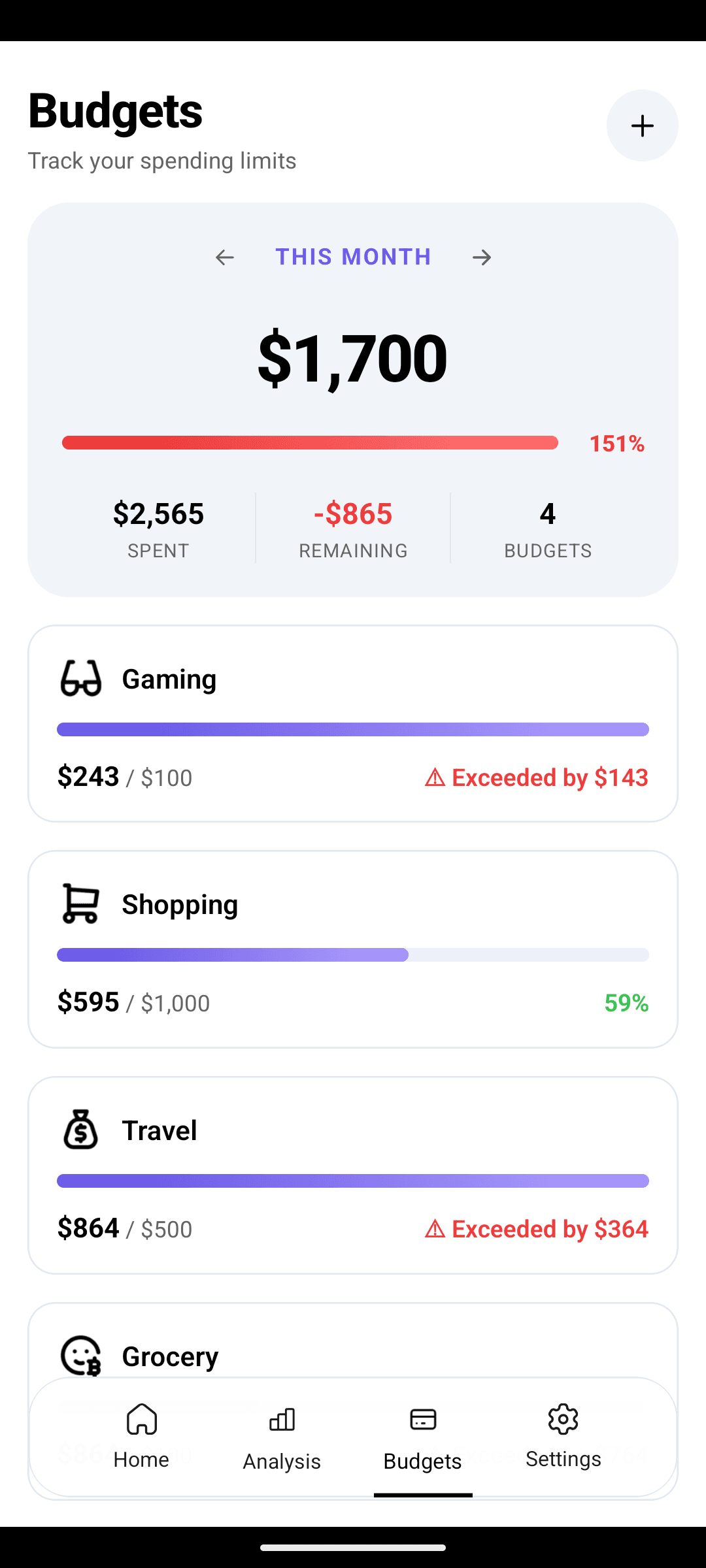
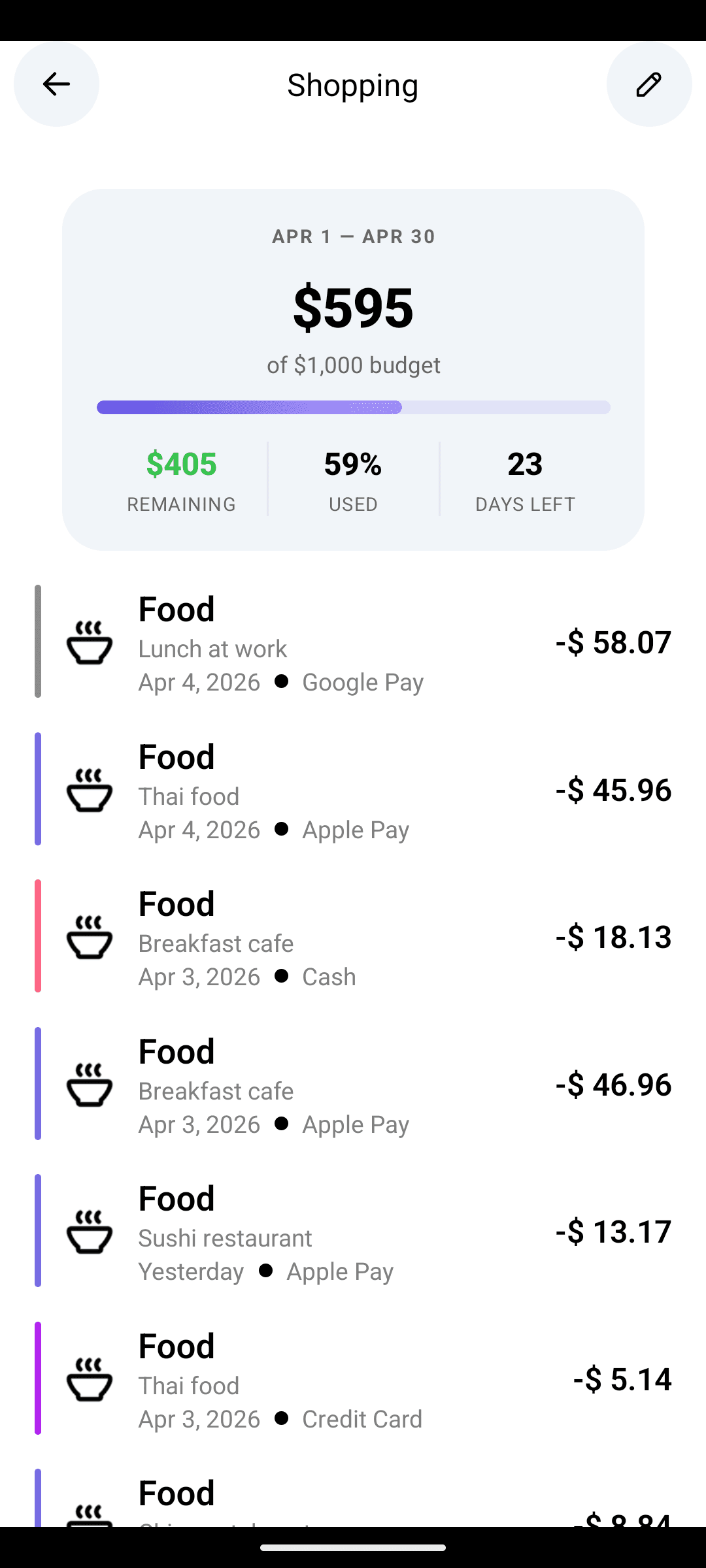
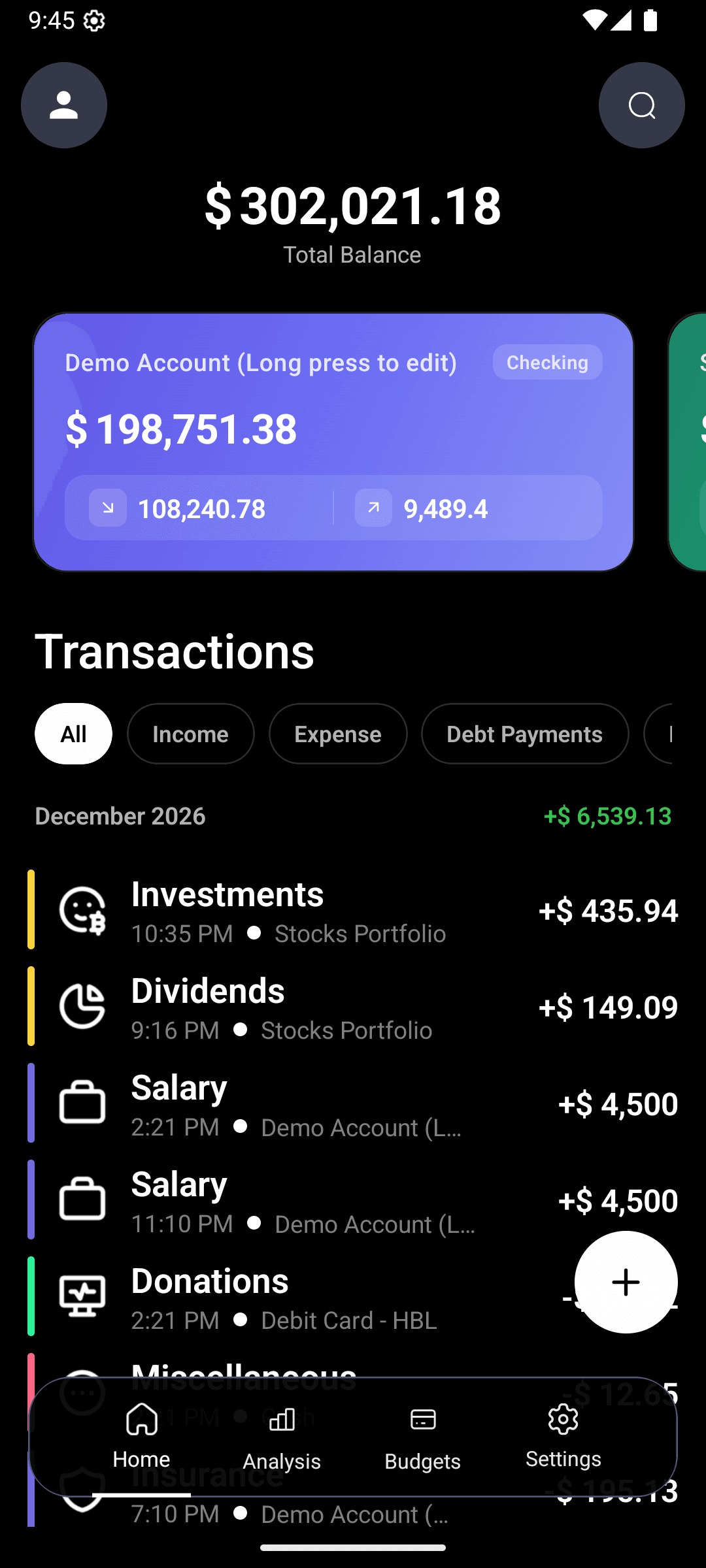
CashFlow AI's multi-account view shows your HYSA balance alongside checking, so you can see the fund growing without obsessing. Set a monthly goal in the app — watch the progress bar fill up. That's the feedback loop most people need.
When to actually use the fund
The point of the fund is to use it when a real emergency hits — not to preserve a balance.
Criteria for a withdrawal:
- Unexpected
- Urgent
- Necessary (not optional)
- Can't be covered by this month's budget
If all four apply, use the fund without guilt. Then rebuild — same automation, same discipline, same HYSA. The fund is designed to be drawn on.
What you should not do: raid it for non-emergencies, feel so protective of the number that you avoid necessary spending, or wipe it out for a good-deal "opportunity."
Track your progress to a real safety net.
See your emergency fund grow alongside the rest of your finances. Free on Android.The one-sentence summary
Start with $1,000, then target 3–12 months of essential expenses (your number depends on dependents, income stability, and industry), keep it in a high-yield savings account at a separate bank, and automate the transfer on payday.
FAQ
See the FAQ block above.
Download CashFlow AI free on Android. For the AI that tracks your savings goal progress each month and flags when you're off pace, see Pro.
Related:
FAQ
Is 3 months enough, or do I really need 6?+
3 months is enough if your job is stable, your skills are in demand, and you have no dependents. 6 months is the standard recommendation for most dual-income households or families with one earner. Single earners supporting others, self-employed people, and anyone in volatile industries should aim for 9–12 months. The answer is situational, not universal.
Should I invest my emergency fund for better returns?+
No. The whole point is that it's available immediately, without loss. Put it in a high-yield savings account (HYSA) that pays 4%+ APY. Investing it in stocks or bonds introduces the risk that you'll need it during a downturn — exactly when it's worth least.
Can I count my credit card limit as emergency savings?+
No. A credit card is debt, not savings. In a real emergency (job loss, medical crisis) your credit line may be reduced or the APR may spike. An emergency fund is cash in a bank account you control. A credit card can be a bridge for the 24–48 hours it takes to access savings, but it's not the fund itself.