Zero-based budgeting (ZBB) is the tightest, most deliberate budgeting method in common use. It has one rule: every dollar of income gets assigned to a category before the month begins, until nothing is left unallocated.
Income minus everything you've planned = zero. That's where the name comes from.
This is the method behind YNAB ("You Need A Budget"), the envelope system your grandparents used, and the playbook most personal-finance coaches start their high-debt clients with. It's also the method that most reliably gets people out of financial crisis — because it forces you to decide in advance, instead of reacting at the register.
This guide walks through how ZBB works, why it beats percentage-based budgeting for certain goals, and how to set it up in CashFlow AI in under an hour.
The short version
- Every dollar gets a job. Income = allocations. Unallocated money doesn't exist.
- You decide what each category gets before the month starts, not after.
- Overspend in one category = move from another. The month always balances.
- Best for: debt payoff, tight budgets, people who want control over every line.
Why "give every dollar a job" works
Most budgets fail because they leave money uncategorized. You look at your account on the 15th, see $800 "left," and spend it — only to realize on the 28th that the $800 was supposed to cover two more weeks of groceries, the utility bill, and a credit-card payment.
ZBB removes that ambiguity. Before the month starts, that $800 is already earmarked: $300 groceries, $200 utilities, $150 credit card, $150 fun. When you look at the account on the 15th, the "$800 left" is actually "$0 left that isn't already promised to something."
The change feels small, but it's the whole difference between reactive spending and proactive spending.
ZBB vs. the 50/30/20 rule
50/30/20 rule
- Three big buckets
- Check the split at month-end
- Flexibility inside each bucket
- Low effort, ~10 min/month
- Good for beginners or comfortable budgets
Zero-based budgeting
- 15–25 specific categories
- Plan at month-start, adjust weekly
- No slack — every dollar is assigned
- Higher effort, ~30 min/month
- Best for tight budgets or debt payoff
Both methods work. Pick ZBB when you have a specific financial goal (debt-free by a date, save a down payment, buffer a low-income year) or when the 50/30/20 version is leaving too much to chance.
The exact setup
Step 1: calculate your "available to budget" number
This is your expected net income for the month. Include only income you're reasonably confident about — not the freelance gig you might land, not the bonus you haven't received. If your income is variable, use a conservative baseline (see budgeting with irregular income).
Write that number at the top. Call it "Available to budget."
Step 2: list your categories
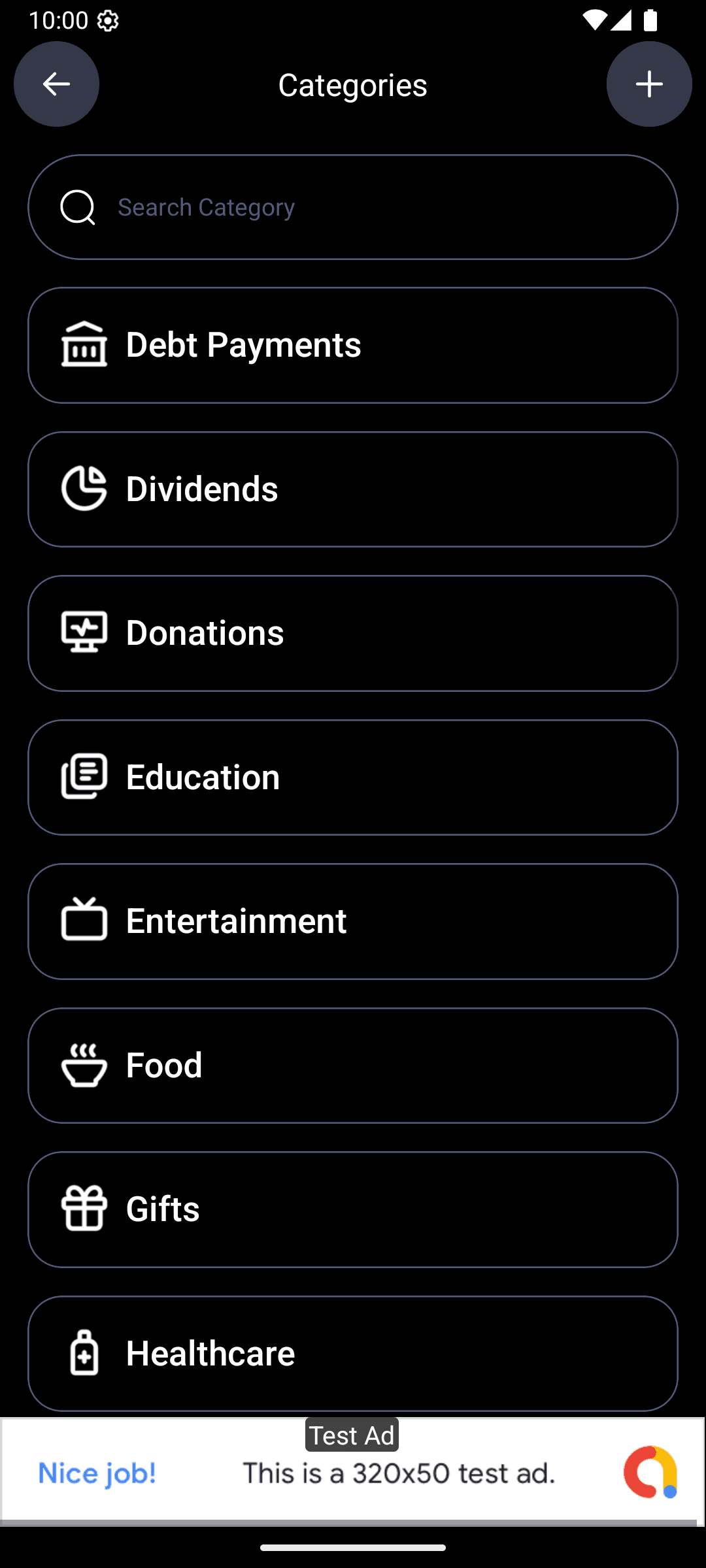
Most people end up with somewhere between 15 and 25 categories. A starter list:
Essentials:
- Rent/Mortgage
- Utilities (electric, gas, water, internet)
- Phone
- Groceries
- Transport (gas, transit, insurance)
- Health insurance
- Minimum debt payments
Quality of life:
- Dining out
- Entertainment/streaming
- Hobbies
- Gym/fitness
- Personal care
- Clothing
Saving + goals:
- Emergency fund contribution
- Retirement
- Debt payoff (above minimums)
- Sinking funds (car maintenance, annual insurance, holidays)
- Long-term goals (down payment, travel)
Don't over-engineer the list. If "hobbies" covers it, don't split into "books" and "board games." You can always refine later.
Step 3: assign a dollar amount to every category
Work from the essentials down:
- Fixed essentials first. Rent, insurance, phone — you know these numbers. Plug them in.
- Variable essentials next. Groceries, utilities — use last month's actual spend (you can find this in CashFlow AI's analytics). If you don't have history yet, take a conservative guess and refine.
- Debt minimums. These are non-negotiable. Plug them in.
- Sinking funds. Annual expenses divided by 12. Car registration, insurance premiums, holiday gifts — all go here.
- Savings goals. How much toward emergency fund, retirement, debt payoff above minimums?
- Quality-of-life categories last. Whatever's left gets divided among dining, entertainment, hobbies, etc.
Total it up. Does it equal your Available-to-budget number? If not:
- Over budget → cut somewhere. Usually quality-of-life first, then re-examine essentials.
- Under budget → assign the remainder to a goal. Savings, debt, or a specific sinking fund. No unassigned dollars.
When income = sum of all categories, you've hit zero. The budget is done.
Step 4: track against the plan, daily
This is where most ZBB attempts die: the plan is beautiful, but three weeks in, no one knows where they stand. The fix is a tool that updates category balances automatically as you log spending.
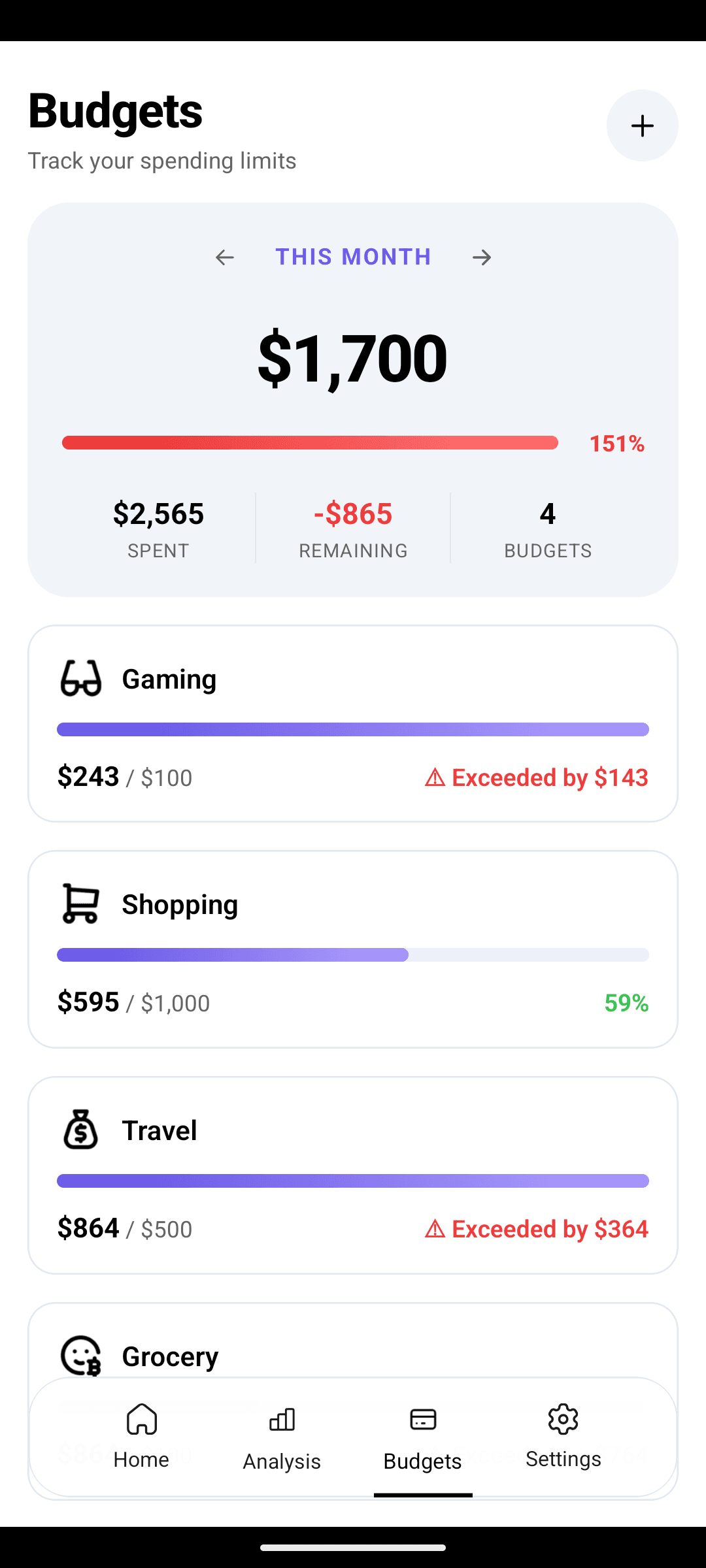
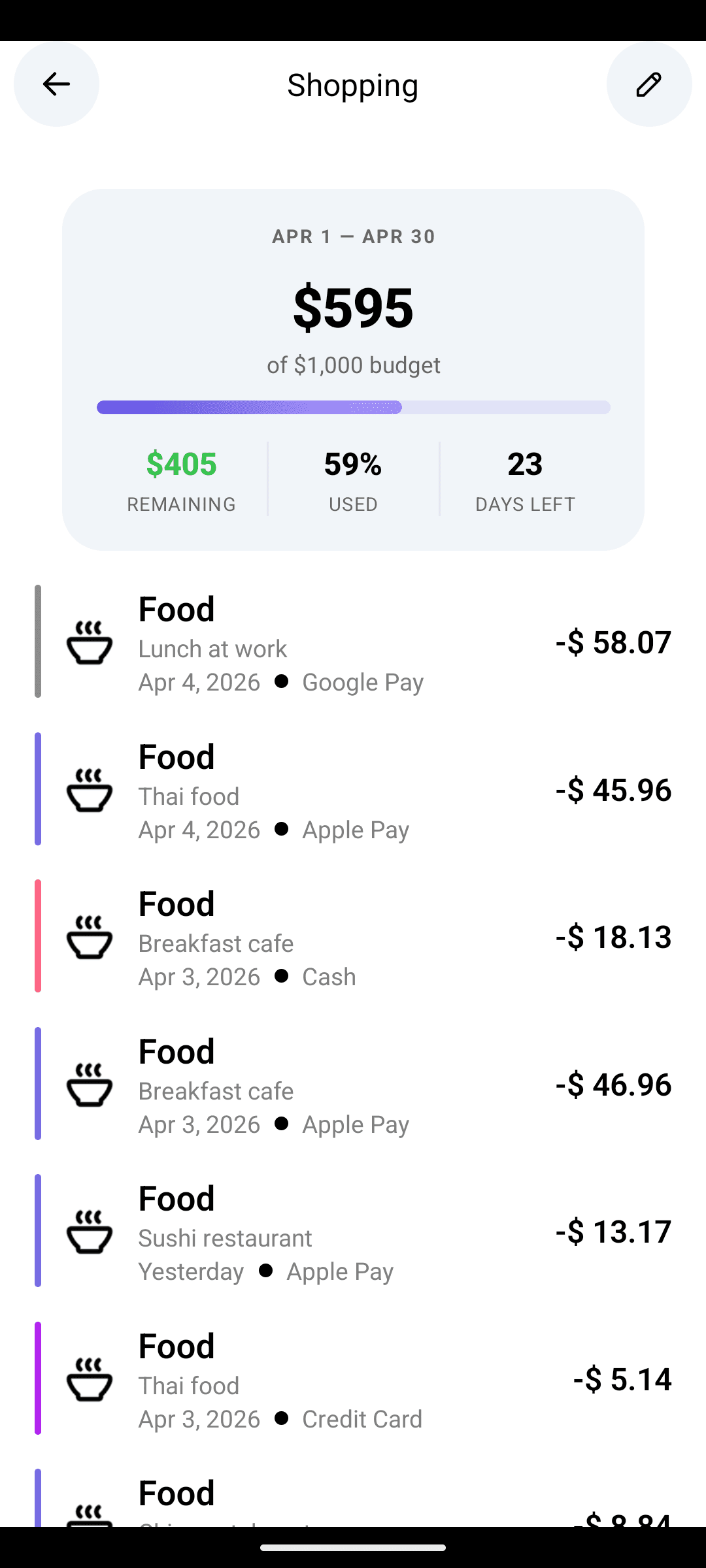
CashFlow AI's category budgets do this. Log "groceries $47" and the Groceries category drops by $47. No sync, no import, no spreadsheet.
Step 5: the month-end rebalance
On the last day of the month, look at every category:
- Categories that ran out early — did you underfund them? Bump the allocation next month.
- Categories with leftover money — roll it to the next month (if it's a sinking fund) or sweep to savings (if it's a regular category and you don't want lifestyle creep).
- Categories you didn't spend in at all — do you need them? Delete if not.
30 minutes, first of the month, sets up the next month. The ritual is the point.
The trick for variable expenses: sinking funds
ZBB's superpower is how it handles annual and semi-annual expenses. Instead of getting blindsided by a $600 car insurance bill in November, you save $50/month in a "car insurance" sinking fund. By November, it's already funded.
Every irregular expense gets this treatment. Annual car registration? Divide by 12. Holidays? Divide your total holiday spend by 12 and save monthly starting in January. See sinking funds explained for the full list and worked examples.
What zero-based budgeting feels like in practice
The first month is hard. You'll run out of a category on the 19th and realize you have to say no to things you used to say yes to. This is the method working.
The second month is smoother. The category amounts are calibrated to reality, the sinking funds are building, and you've learned which trade-offs you actually mind.
By month three, most people describe the feeling as "lighter." Not because they're spending less overall (they might be spending about the same) — but because the constant background anxiety about whether they're on track is gone. The plan told them they're on track.
Common failure modes
Too many categories
25 is an upper bound, not a target. If you start with 40 categories, you'll abandon the method before week three. Start coarse, refine over time.
Forgetting to rebalance when you overspend
If groceries runs over by $40, you must move $40 from another category today — not at month-end. Otherwise the overage creates a phantom deficit that compounds by the 30th.
In CashFlow AI, the category bar turning red is the signal. Reallocate then.
Running two budgets
Some people try ZBB alongside "whatever's in the checking account is available." That defeats the entire point. The budget is the source of truth. What's physically in the checking account is just plumbing.
Treating every month as identical
Your December budget should not look like your June budget. Holidays, heating bills, travel — real life is seasonal. Expect to adjust every month.
How CashFlow AI makes ZBB work
The old ZBB methods required a spreadsheet with 25 rows and manual category updates every week. ZBB lived or died on whether you'd do that spreadsheet work.
CashFlow AI collapses that into a single daily habit:
- Natural-language logging — type "groceries 47" and the app categorizes and deducts in one tap
- Real-time category balances — see what's left in each envelope on the home screen
- Spend alerts — at 75% and 90%, the app warns you before overspending
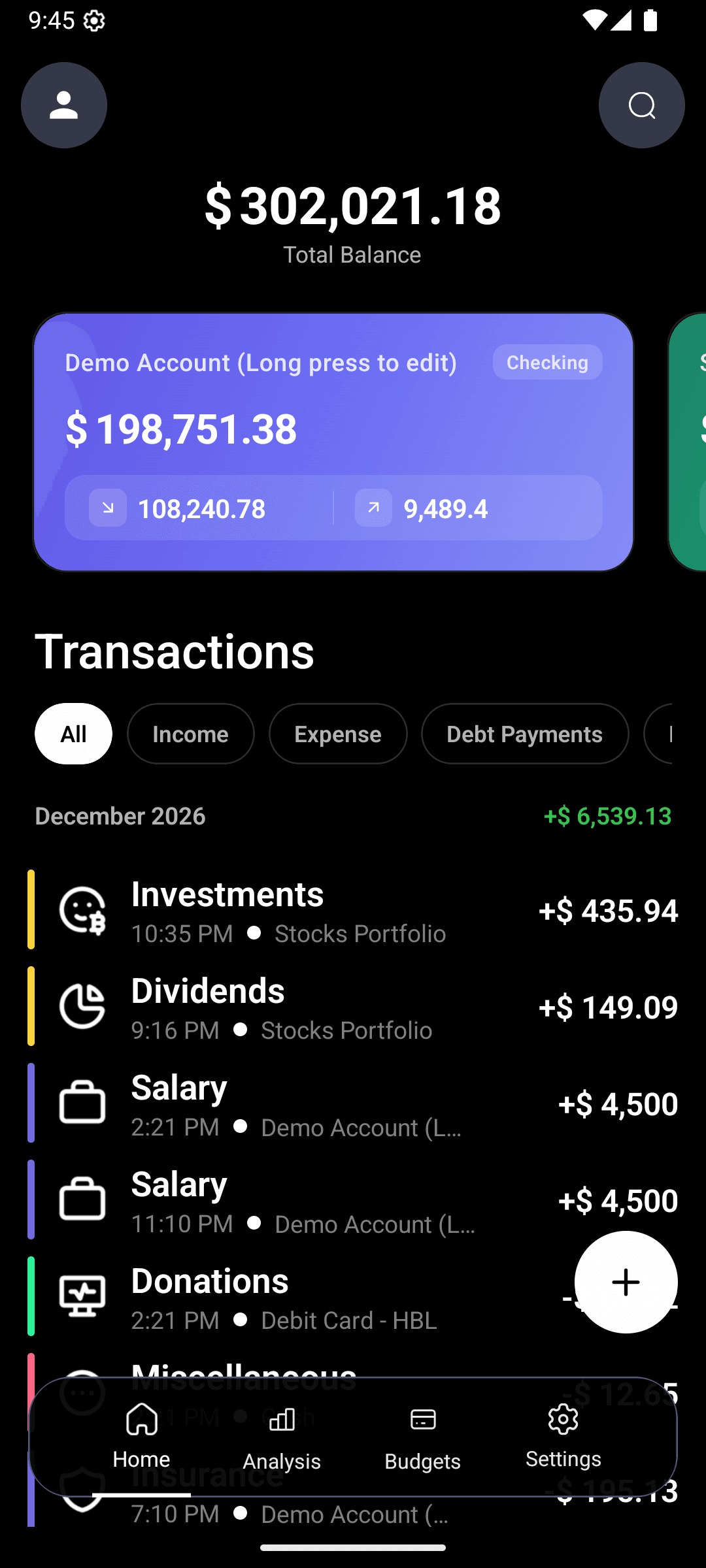
- Multi-account support — one view across checking, cards, and cash
- Analytics — month-end review takes 5 minutes, not an hour
Give every dollar a job — in under an hour.
Zero-based budgeting without the spreadsheet. Free on Android.Is zero-based budgeting right for you?
ZBB is a great fit if:
- You're paying off debt (credit cards, student loans)
- Your budget is tight and margin matters
- You've tried looser methods and found them too vague
- You like knowing exactly where things stand
- You have a specific savings goal with a deadline
ZBB might be overkill if:
- Your savings rate is already 30%+ on autopilot
- Your income is highly variable and hard to predict
- You find granular tracking stressful rather than clarifying
In those cases, start with the 50/30/20 rule — simpler, still effective.
FAQ
See the FAQ block above.
Download CashFlow AI free on Android. For the AI that builds and maintains your zero-based budget each month, see Pro.
Related:
FAQ
What's the difference between zero-based budgeting and the 50/30/20 rule?+
50/30/20 is a high-level percentage split across three buckets — simple to apply but blunt. Zero-based budgeting assigns every single dollar to a specific category up-front, so nothing is unaccounted for. ZBB is more granular and more effective for debt payoff or tight budgets; 50/30/20 is better for people just starting out or with plenty of margin.
Do I need separate bank accounts for zero-based budgeting?+
No. The old envelope system required physical cash envelopes (or separate accounts for digital envelopes). Modern zero-based budgeting works with virtual categories in an app — one checking account, many budget lines. CashFlow AI tracks category balances without you having to split money between accounts.
What happens when I overspend in one category?+
You move money from another category to cover it — same month. That's the whole point of ZBB: overspending doesn't break the budget, it forces a trade-off. You consciously decide what to cut so the total still adds up to your income. The act of moving money is what builds the awareness habit.