Most budgeting advice assumes a steady paycheck. If you're a freelancer, creator, contractor, or small business owner, your income is lumpy — great months and lean months — and the advice falls apart.
The fix isn't a different app. It's a different structure. This guide walks through the baseline / buffer / surplus system that works for irregular income, and shows how to implement it in CashFlow AI.
The problem with "just track expenses"
When income is steady, tracking expenses is enough. You know what comes in; you watch what goes out; you adjust.
When income is variable, expense tracking alone leaves you perpetually anxious. You can't answer the question "am I doing okay this month?" because "okay" depends on an income number you won't know for another two weeks.
The answer is to decouple your spending from your current income. Here's how.
The baseline / buffer / surplus system
The core idea: figure out a fixed baseline that your lifestyle requires. Keep a buffer that smooths income volatility. Direct everything above that — the surplus — toward long-term goals.
Step 1: calculate your baseline
Your baseline is the minimum monthly amount that runs your life: rent, utilities, groceries, transport, debt minimums, insurance, and a reasonable personal spending allowance.
Not included: discretionary travel, gifts, upgrades, savings beyond the buffer.
Most people's baseline is 40–60% of their average income. If you don't know yours, use CashFlow AI to capture expenses for 60 days. The app will tell you — to the dollar — what your actual baseline is.
Step 2: build the buffer
The buffer is the money that lets you pay your baseline even in a zero-income month. It lives in a separate savings account.
- Minimum target: 3 months of baseline. Absolute floor.
- Recommended target: 6 months of baseline. This is where freelancers stop being anxious.
- Comfortable target: 9–12 months of baseline. This is where you can take strategic risks — raise rates, turn down bad clients, change direction.
Don't spend from the buffer in normal months. It exists for the bad ones.
Step 3: route the surplus
Once the buffer is built, here's how to handle new income:
- Taxes: fixed % off the top, to a separate tax account, before it touches anything else.
- Baseline: whatever you need to refill this month's baseline spending.
- Long-term goals: retirement, bigger savings, investment accounts.
- Business reinvestment: equipment, software, contractors.
- Discretionary upgrade: the thing you've been eyeing.
The order matters. Tax first, baseline second, goals third, upgrades last.
The "pay yourself a salary" upgrade
Once your income averages high enough that the buffer is genuinely stable, a powerful upgrade: pay yourself a fixed monthly "salary" from your business account to your personal account.
The personal side then operates like a regular-income budget. Stable number in, stable decisions.
The business side keeps the volatility. Some months money piles up; some months it doesn't. The buffer handles the difference.
Most established freelancers end up here within 2–3 years.
Taxes: the one rule
The most common irregular-income failure: spending pre-tax money as if it were post-tax.
The rule: every dollar of income, move a fixed tax percentage (25–30% for US self-employed, adjust for your jurisdiction) to a tax-only account the day it hits.
Treat that money as if it does not exist. Never draw from it except for quarterly estimated payments and the annual filing.
In CashFlow AI, mark the tax account clearly and check it only on tax deadlines.
Using CashFlow AI for variable income
Account structure
Set up these accounts in the app:
- Business checking — income lands here.
- Tax holdings — fixed % moved immediately.
- Personal checking — your "salary" lands here monthly.
- Income buffer — holds 6+ months of baseline.
- Long-term savings — retirement, investments, big goals.
- Discretionary cushion — smaller, for upgrades and variance.
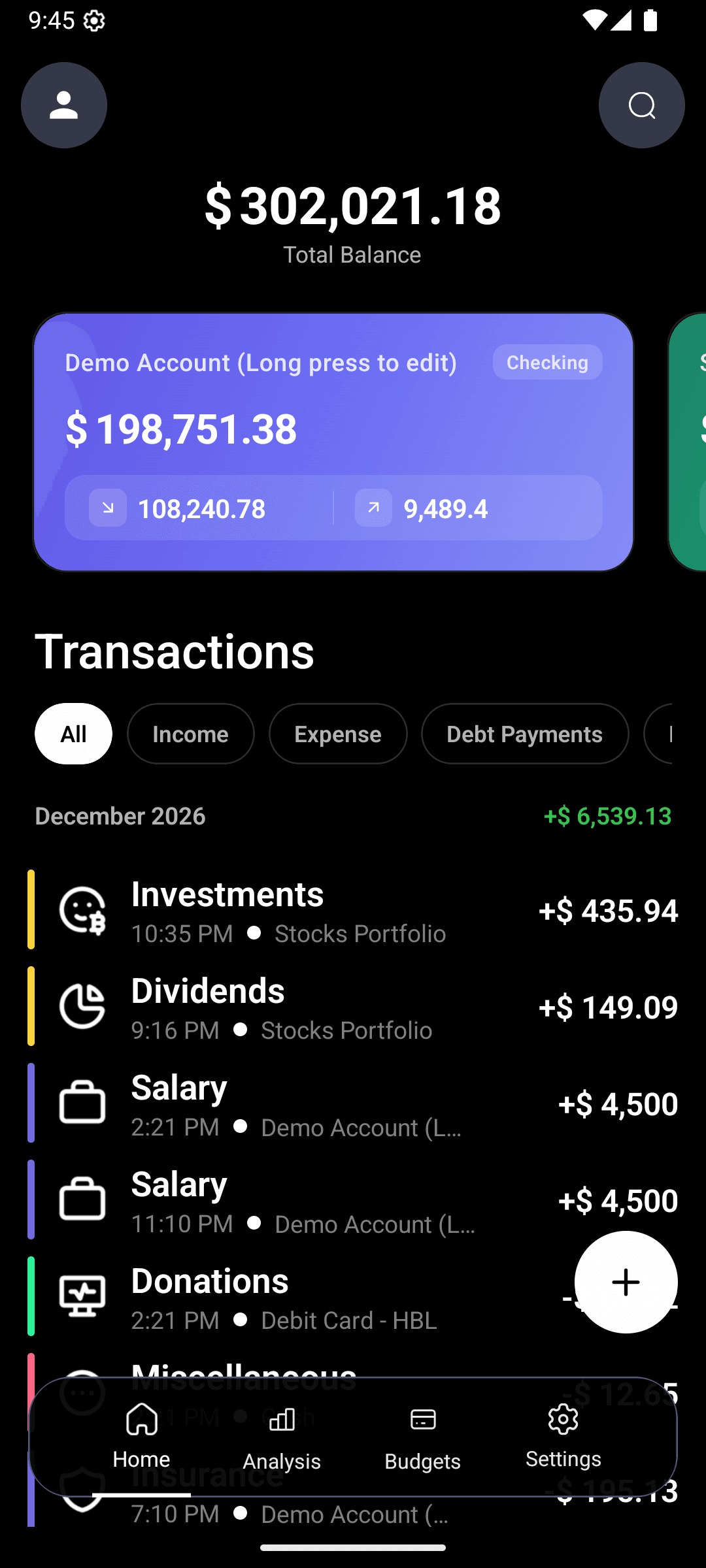
CashFlow AI's multi-account view lets you see the whole picture at once.
Budgets
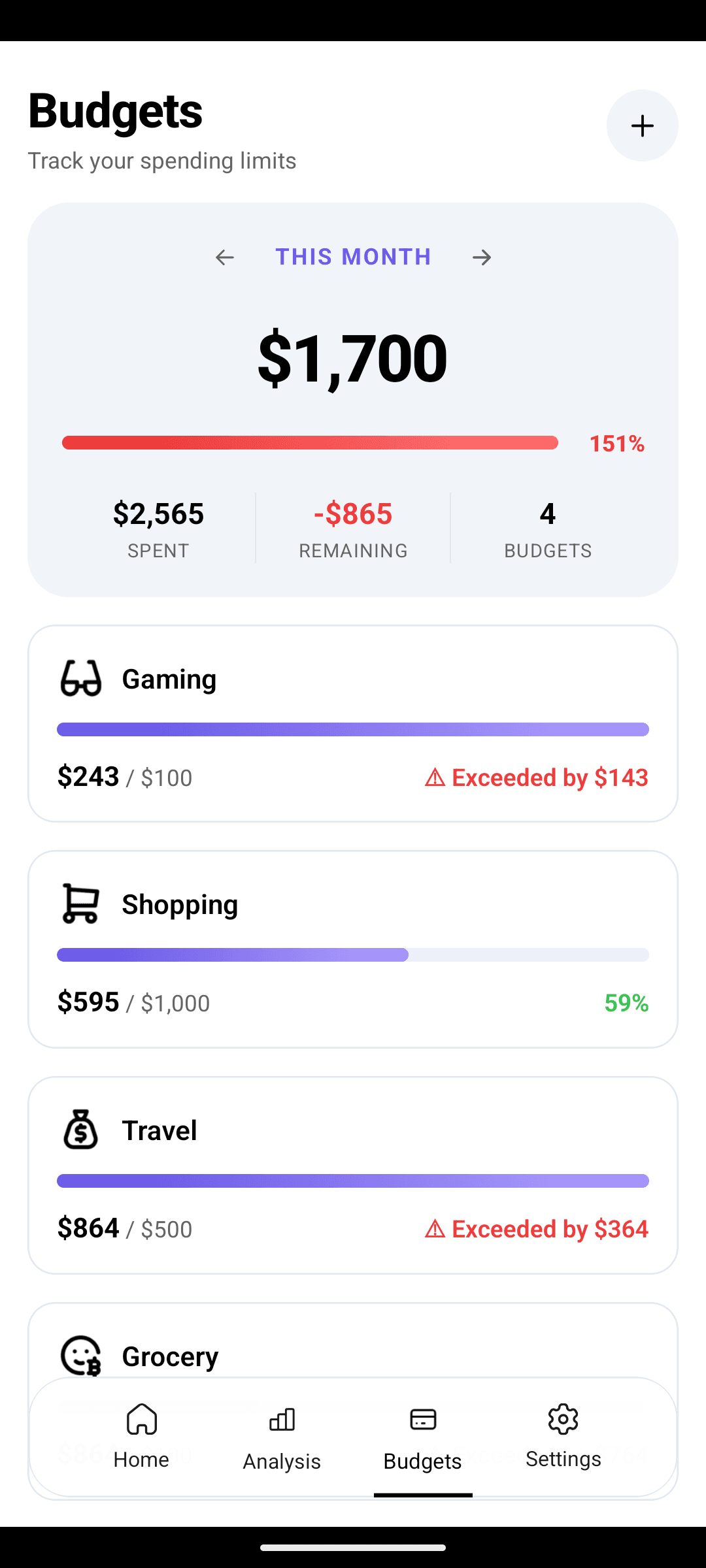
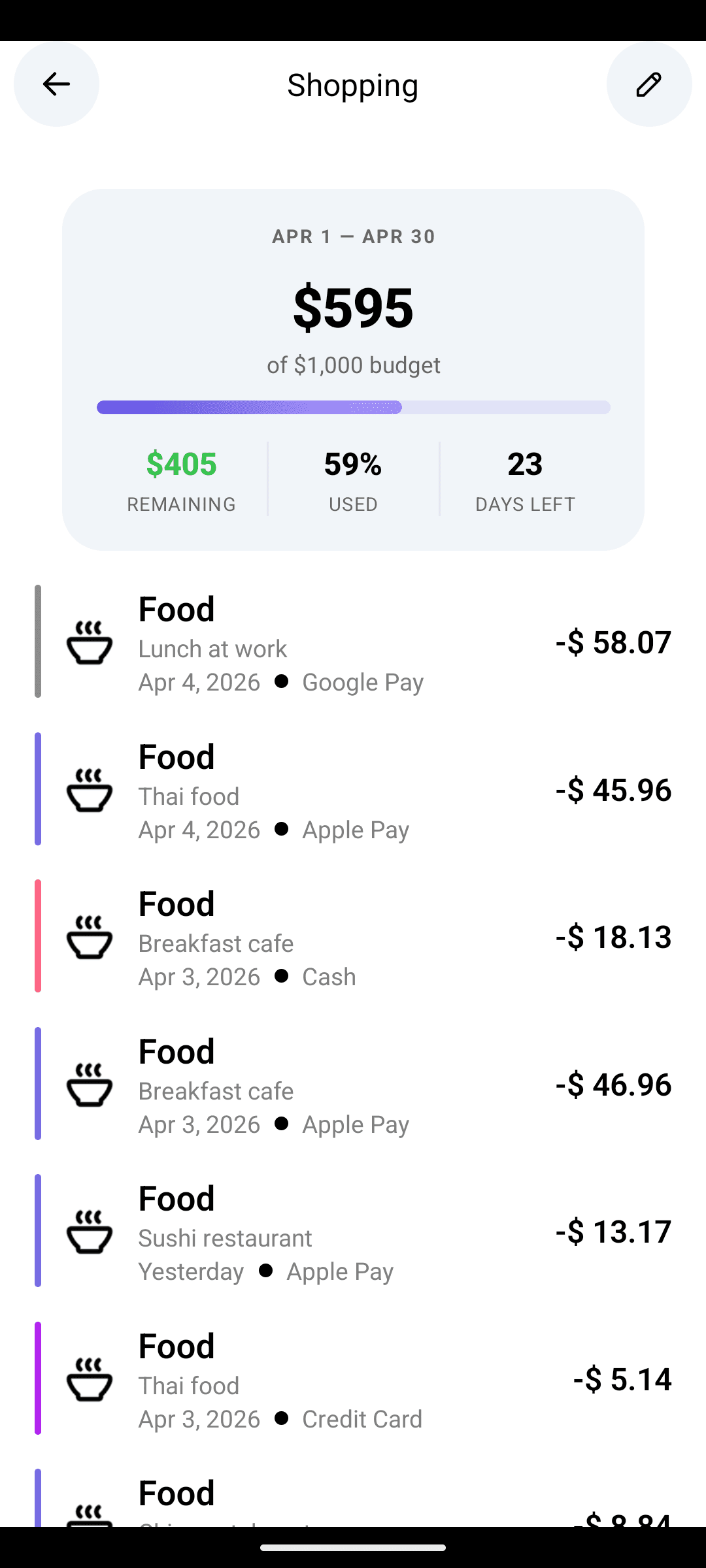
Set category budgets based on your baseline, not your average income. That way even in a slow month, your budget isn't fantasy.
The monthly ritual
Because income is lumpy, the monthly review matters even more than for salaried earners:
- What came in this month (and from which clients/sources)?
- What did taxes-off-the-top set aside?
- Is the buffer at or above target?
- Where is the surplus going?
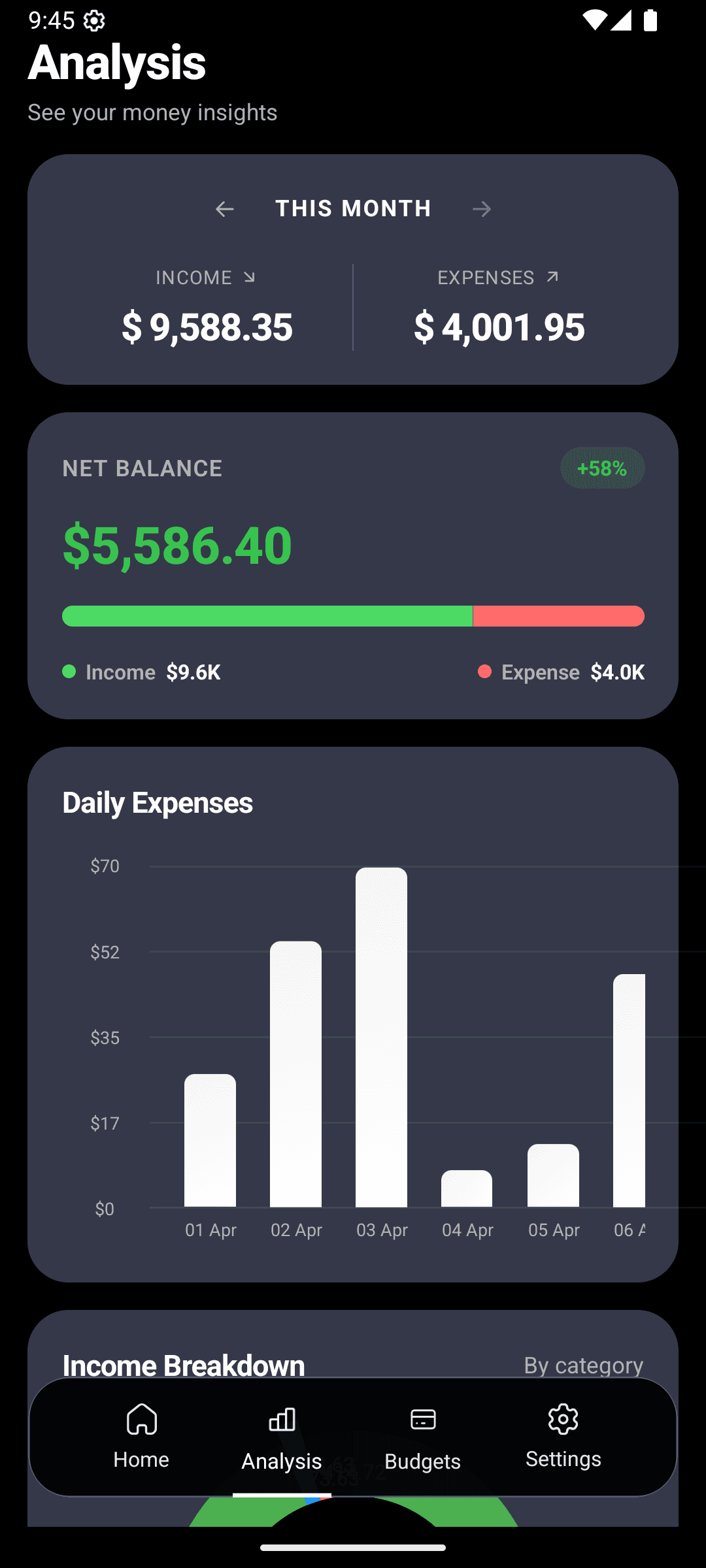
CashFlow AI's Pro monthly insights automate steps 1 and 4 and surface the drift in step 3.
Special situations
Creators with Patreon / YouTube / ad revenue
Treat each platform as a separate income source in the app. Watch for concentration risk: if 60% of income comes from one platform, that's a stability problem your buffer needs to account for.
Contractors with 1099s
Quarterly tax estimates matter here. The tax account isn't theoretical — the IRS expects payments. CashFlow AI won't file for you, but it will tell you exactly how much to set aside.
Small business owners with payroll
Pay yourself a salary; don't draw ad-hoc. It's cleaner for taxes and personal budgeting.
International freelancers
Currency fluctuation is a second axis of volatility. CashFlow AI supports multi-currency transaction logging natively, so you can see your spend in whatever currency matches your reality.
The single biggest mindset shift
Regular-income budgeters think in months. Variable-income budgeters should think in quarters and years.
Any single month will be weird. Quarters smooth the noise. Years tell you the real story. Use the app's monthly view for day-to-day decisions, but measure your actual progress quarterly.
FAQ
See the FAQ block above.
Download CashFlow AI free. For the automated monthly brief that keeps your buffer and surplus on track, see Pro.
Related:
FAQ
What's the right size of income buffer?+
The standard advice is 3 months of essentials. For most freelancers that's too little — income can swing for longer than that. Aim for 3 months of essentials in liquid savings, plus a 1-month 'income smoothing' buffer that you draw from in low-income months and top up in high-income ones.
How should freelancers budget for taxes?+
Move a fixed percentage of every payment to a dedicated tax account the day it hits. For US self-employed, 25–30% is a safe baseline until you have a CPA relationship. Never touch that account for anything but taxes.
Should I pay myself a salary from my business?+
Yes, once income is regular enough. A fixed monthly 'salary' from business to personal account smooths out the noise and makes personal budgeting behave like a regular-income budget.